Now live: a hybrid process digital twin for amine gas sweetening — it names the fault and the root cause, not just the alarm. Request a demo →

QEMOPS logo

If a licensor contract applies

Working With Your Licensor

A licensor contract does not have to stop the work.

Many units run under a contract with the technology provider who licensed the process. That contract protects their design and their guarantee. Our solutions fall into four kinds, sorted by one rule: how much each one touches what the licensor designed and guarantees. The first kind needs no licensor at all.

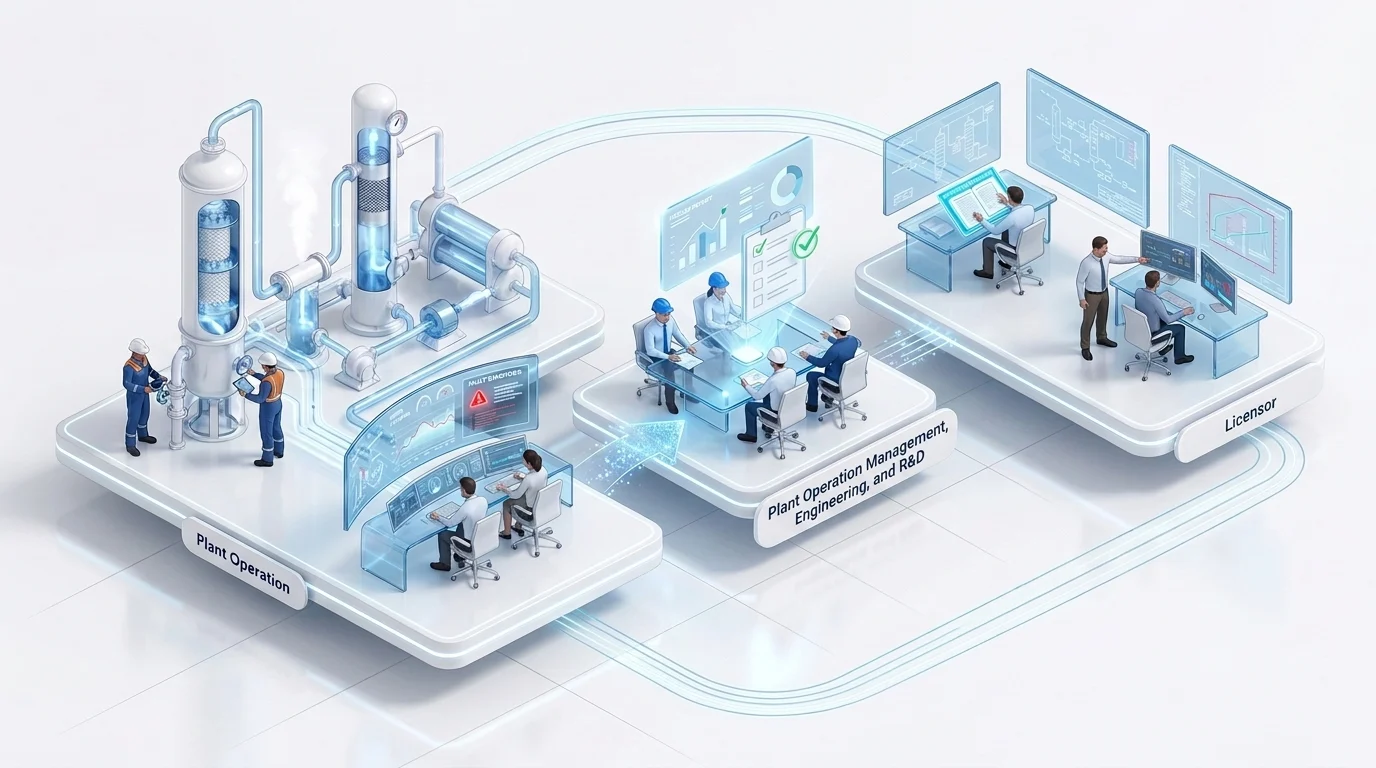
Plant operation; plant operation management, engineering and R&D; and the licensor, connected in one loop: plant data becomes a shared report that the plant team and the licensor review together.

Four kinds of solution

The more a result changes the plant, the more the licensor is involved.

Read the rings clockwise from top left. Each step adds licensor involvement. Every decision stays with you.

1234

1Monitor and diagnose

No licensor approval needed

Reads plant data and changes nothing. It finds faults early, explains them and puts a cost on them. The licensor’s design and guarantee are not touched.

Tools: Run, Detect, Predict, Explore, Ask, Learn, Gage, Verify, Log, Report

2Optimise inside the limits

Licensor is informed

Advice on set-points that stays inside the limits in the licensor’s operating manual. Your team decides. The licensor receives the results.

Tools: Optimise, Tune, Control, Dynamic Simulate, Plan

3Change beyond the limits

Licensor approval needed

Results that point to new operating limits, solvent, equipment or design. These can affect the warranty or performance guarantee, so the licensor reviews them first. We prepare the case.

Tools: Dynamic Simulate, Compare

4Research and new ideas

Joint study with the licensor

New ideas that are not yet proven. They are accepted only after a detailed study or pilot test, carried out together with the licensor.

Tools: Research

How we start

Start where no approval is needed.

  1. 1

    Read the contract together

    We check what the licensor contract covers: the design, the guarantee, and any rules on sharing plant data.

  2. 2

    Begin with monitoring

    Monitoring and diagnosis can start at once. It shows value early and builds trust with your team and the licensor.

  3. 3

    Share results with the licensor

    Optimisation advice is shared with the licensor, so they always know what is being run inside their limits.

  4. 4

    Bring the bigger ideas to them

    Changes beyond the limits, and research ideas, go to the licensor as a clear written case for their review.

What we do not claim

Two things to check early.

  • Some licensor contracts limit sharing plant data with anyone else. If yours does, even monitoring may need a short data-sharing agreement. Ask about this before a pilot.
  • We are not your legal advisers. Which kind a result falls into depends on your contract, and the final reading of that contract belongs to you and your licensor.

The method is easiest to judge from the output.

The platform runs on a real amine train with thirteen days of one-minute history behind it. Open a diagnosis and read the evidence for yourself.

Open the platform